
An engine misfire can lead to a quick ignition-coil quote. But replacing a healthy coil wastes money and may leave the original problem unresolved.
Ignition coil replacement commonly costs around $200–$300 in AutoZone’s U.S. example; RepairPal estimates $238–$320 as of September 2026. Both are general repair estimates, not quotes for a specific engine or wholesale parts. Verify the misfire diagnosis, number of coils, and OE reference before ordering.

I separate the workshop decision from the parts order. First, the technician must confirm that a coil is faulty. Then the buyer needs an exact replacement reference, package description, and quotation that matches the intended vehicle.
What Does Ignition Coil Replacement Usually Cost?
A quote for one coil can be confused with the price of a full ignition-system repair. The result is an unrealistic comparison between two different jobs.
RepairPal’s September 2026 U.S. estimate is $238–$320, including $164–$211 in parts and $74–$109 in labor. Vehicle access, diagnosis, the number of failed coils, and additional repairs can change the bill. Wholesale unit prices exclude workshop labor and should not be compared directly.
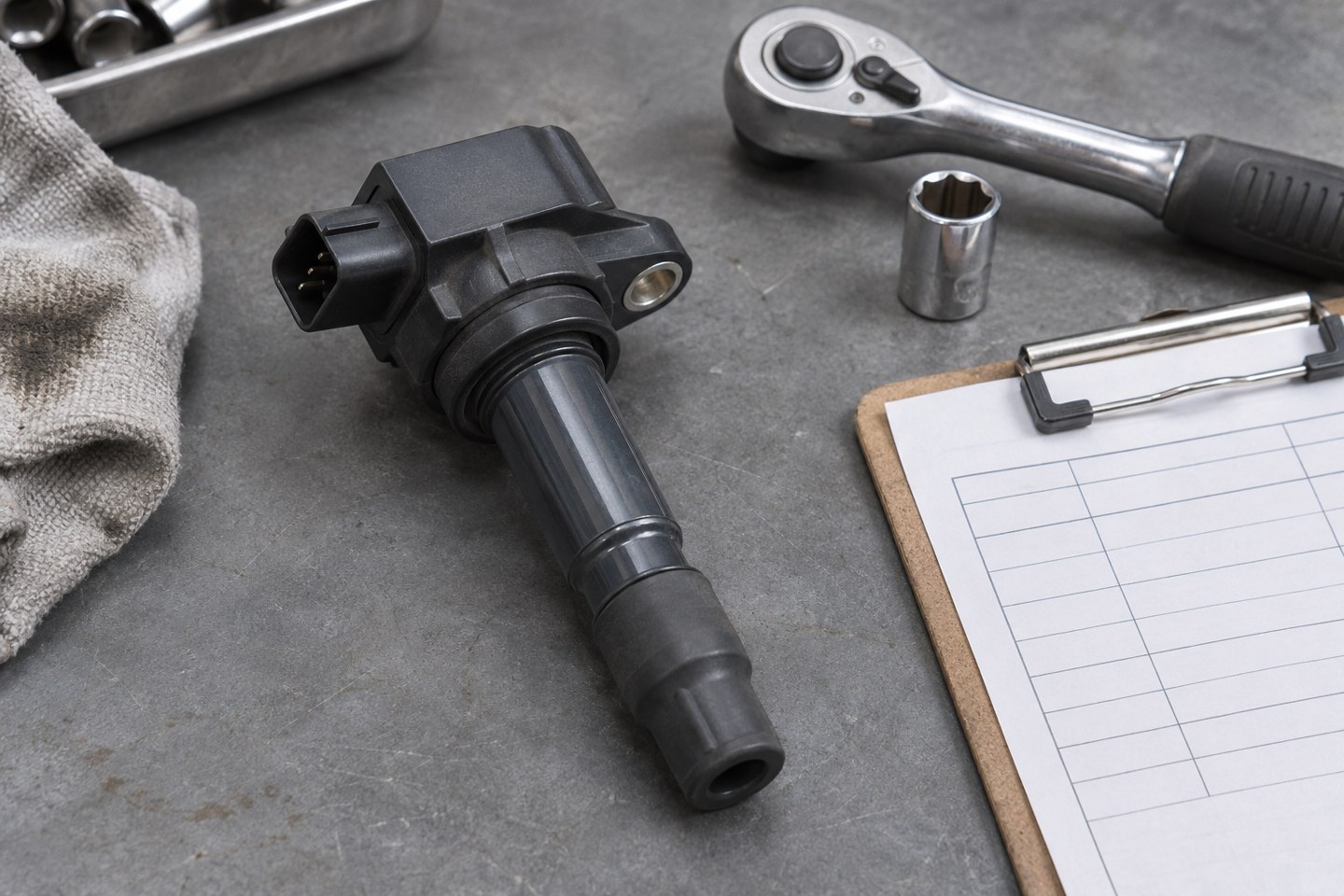
Understand the published U.S. estimate
The AutoZone ignition coil replacement cost guide discusses an illustrative U.S. average of around $200–$300 and notes that a single replacement coil may be priced around $35 to more than $300 depending on vehicle. Separately, RepairPal estimates $238–$320 for ignition coil replacement as of September 3, 2026, with an estimated $164–$211 for parts and $74–$109 for labor. These are useful starting points for readers asking what the repair might cost, not interchangeable measurements or guaranteed real-time offers. RepairPal excludes taxes, location differences, and related repairs; AutoZone uses its own illustrative assumptions. Labor charges differ by workshop, vehicle layout, local market, and how much diagnosis is required.
Some engines allow easy access to coil-on-plug units, while others require removal of surrounding parts. A repair involving one confirmed coil differs from a job requiring multiple coils or associated spark plugs. The technician should identify exactly what has failed before preparing the complete list. No technical source supports changing every coil automatically whenever one cylinder misfires.
| Cost element | Typical content | What should be confirmed |
|---|---|---|
| Replacement coil | One unit or specified set | Exact OE reference, quantity, design |
| Diagnosis | Fault codes, wiring and ignition checks | Whether a coil is actually defective |
| Installation labor | Removal, installation, post-repair checks | Access and vehicle service procedure |
| Related parts | Spark plug, boot, connector, or seal if needed | Actual condition and confirmed repair scope |
| Commercial costs | Packaging, freight, taxes and order terms | Destination and purchasing volume |
For international parts distributors, I would keep the unit price and the installed repair price in separate columns. Otherwise a wholesale quotation can appear unreasonable next to a U.S. article that includes different parts or services.
Quality tier is not a fitment guarantee
Genuine, branded OE-supplier, premium aftermarket, and private-label products may come with different commercial terms. But a buyer should not assume that a product is genuine or original equipment because its catalog title contains “OEM.” The item must match the required specifications and vehicle application before price comparisons are meaningful.
How Do You Know Whether an Ignition Coil Really Needs Replacement?
An engine warning light can point toward a cylinder misfire, not necessarily a bad coil. Ordering directly from a fault code can miss the actual cause.
Confirm coil failure through application-specific inspection and testing. Misfires, rough running, poor acceleration, and a warning light are possible signs, but spark plugs, wiring, injectors, mechanical problems, and control faults can produce similar symptoms.

Follow an evidence-based diagnosis
A professional technician may review diagnostic trouble codes, inspect electrical connectors, verify power and control signals, assess the spark plug, and compare ignition-system behavior. Which tests are appropriate depends on the particular system and its safety requirements. A code indicating a misfire in one cylinder identifies a problem location, not the defective component with certainty. Where the manufacturer permits it, a trained technician may move a suspect coil to another cylinder and observe whether the misfire follows it; the method is application-dependent and must not be attempted around live high-voltage parts.
HELLA’s ignition coil checking guide explains coil function, possible failure causes, electrical checks, and the need to follow vehicle specifications. It also warns that electronic ignition circuits can carry dangerous voltage. I would never recommend touching energized ignition parts or improvising tests around a running engine.
Avoid generic resistance claims
Coils differ in construction. Some designs include electronics or high-voltage components that make a simple resistance measurement an incomplete or inappropriate test. A generic ohm value from a different vehicle is not proof that a replacement coil is defective. The trained technician should use the correct manufacturer reference and diagnostic method for that exact ignition system.
A worn spark plug or oil intrusion into a plug well can contribute to repeat trouble. If the underlying condition damages a new coil, replacing the coil alone will not solve the root cause. I would ask for the workshop’s final diagnostic finding before sending a parts request.
For distributors, this reduces avoidable returns described as “coil did not fix misfire,” where the shipped product may have been correct but the original diagnosis was incomplete.
Should You Replace One Ignition Coil or All of Them?
A complete set sounds convenient, but it can multiply the bill without improving a repair. The right choice depends on evidence and vehicle requirements.
If one coil is confirmed faulty and the manufacturer permits individual service, replacing that coil may be sufficient. A full set may be considered for application-specific reasons or a customer’s maintenance plan, but it should not be presented as universally required.
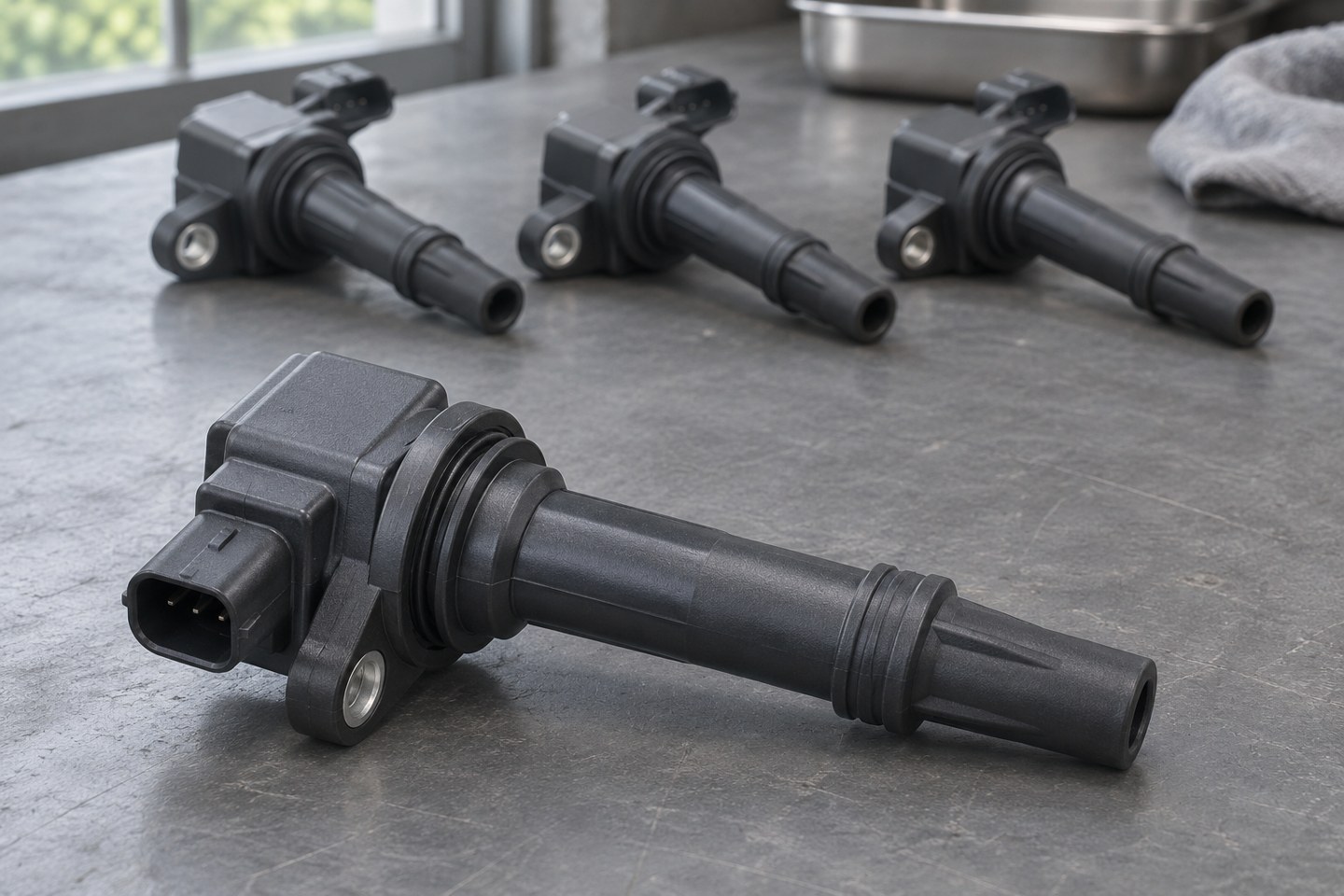
Separate a failed component from a preventive decision
On many modern gasoline engines, each cylinder uses a dedicated coil-on-plug unit. A diagnosed defect in one coil does not automatically establish failure in the remaining coils. Replacing one unit can therefore be a reasonable repair, subject to the vehicle’s service guidance. Other ignition architectures may use a coil pack or another arrangement that changes the replacement scope.
The buyer should first know which design is installed. A single plug-top coil, multi-output coil pack, and ignition module are not interchangeable product categories. The repair invoice should state the actual item and how many were replaced.
| Situation | Sensible sourcing question |
|---|---|
| One coil confirmed faulty | Can the specified unit be replaced separately? |
| Multiple confirmed faults | Which coil references and quantities are needed? |
| Plug contamination or damage | What caused the problem, and what related repair is required? |
| Customer requests a complete set | Is it an approved matched set or individual verified coils? |
When do spark plugs enter the decision?
Spark plugs and ignition coils work together but have different service functions. A deteriorated plug can increase the load on an ignition system, while a misfire can have fuel, mechanical, or electrical causes. A technician should inspect related ignition components and replace them when their condition or service interval justifies it, not automatically because a coil is being changed.
NGK’s spark plug technical basics describes several possible sources of misfire, including worn plugs and ignition components. I would use it to support the distinction, not to infer a specific coil failure from a spark plug photograph alone.
For a B2B order, record coils and spark plugs on separate SKU lines. This allows the workshop, distributor, and supplier to agree on the exact repair scope and makes repeat ordering less confusing.
What Makes Ignition Coil Prices Different Between Vehicles?
Coils can share a similar outside shape while using different electrical characteristics or connectors. A cheap substitute may be the wrong product even when it appears to fit.
Coil design, electrical requirements, connector and boot geometry, intended engine, quality tier, and supply package all affect price and suitability. The correct comparison is between verified parts for the same application, not every item labeled “ignition coil.”
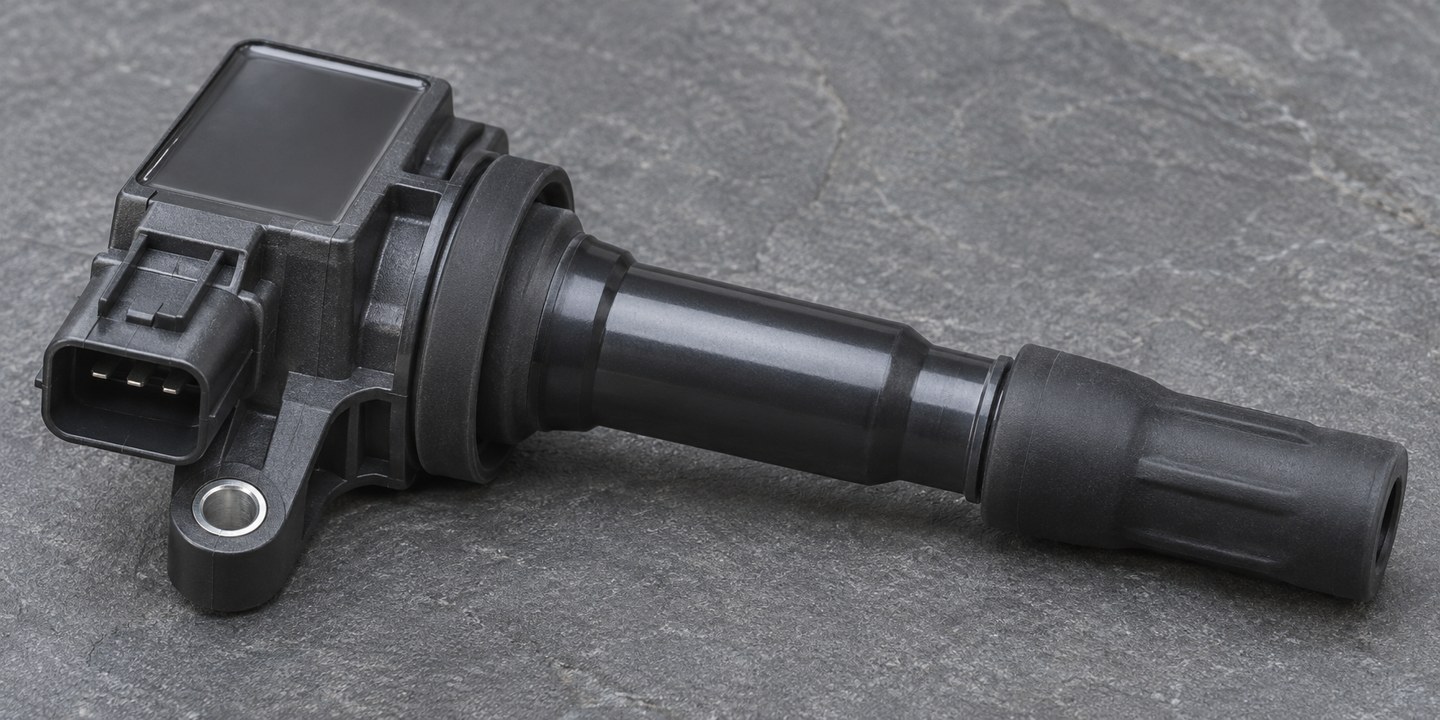
Electrical and physical requirements both matter
A coil transforms electrical energy into the voltage needed for a spark at the plug. Its operating characteristics are designed for a particular ignition system and control strategy. An aftermarket unit must meet the required application, not merely match the number of terminals visible in a photograph.
Important identification details can include the connector, mounting method, plug boot length, sealing design, and specified application. Some coil assemblies include boots or connection components, while other product listings cover only part of an assembly. A buyer who compares prices without checking package contents can make an inaccurate decision.
For a reseller, the product listing should identify the OE reference, engine application, quantity, and whether the part is one coil or a package of several units. Broad claims such as “universal Mercedes ignition coil” create unnecessary uncertainty, particularly across multiple gasoline-engine generations.
Avoid unsupported quality promises
Different commercial tiers may reflect different brands, documentation, packaging, and warranty conditions. But I would not describe an unverified aftermarket coil as an original factory part, nor promise that every version meets a particular OE performance standard without evidence. Testing claims, certifications, and warranty periods should be specific to the product and the supplier’s current approved information.
If an importer wants private-label packaging, discuss the carton, label, part identification, and traceability requirements separately from technical compatibility. The same coil reference must remain identifiable after it is repacked or sold through a distributor’s catalog.
How Do You Match an Ignition Coil for a Mercedes-Benz Engine?
Two Mercedes-Benz models may use very different coil designs even when both are gasoline vehicles. A broad model name does not establish a fit.
Start with the verified OE number, VIN or complete vehicle data, engine code, and production information. Then confirm the coil design, connector, mounting features, and application-specific catalog data before accepting an alternative reference.
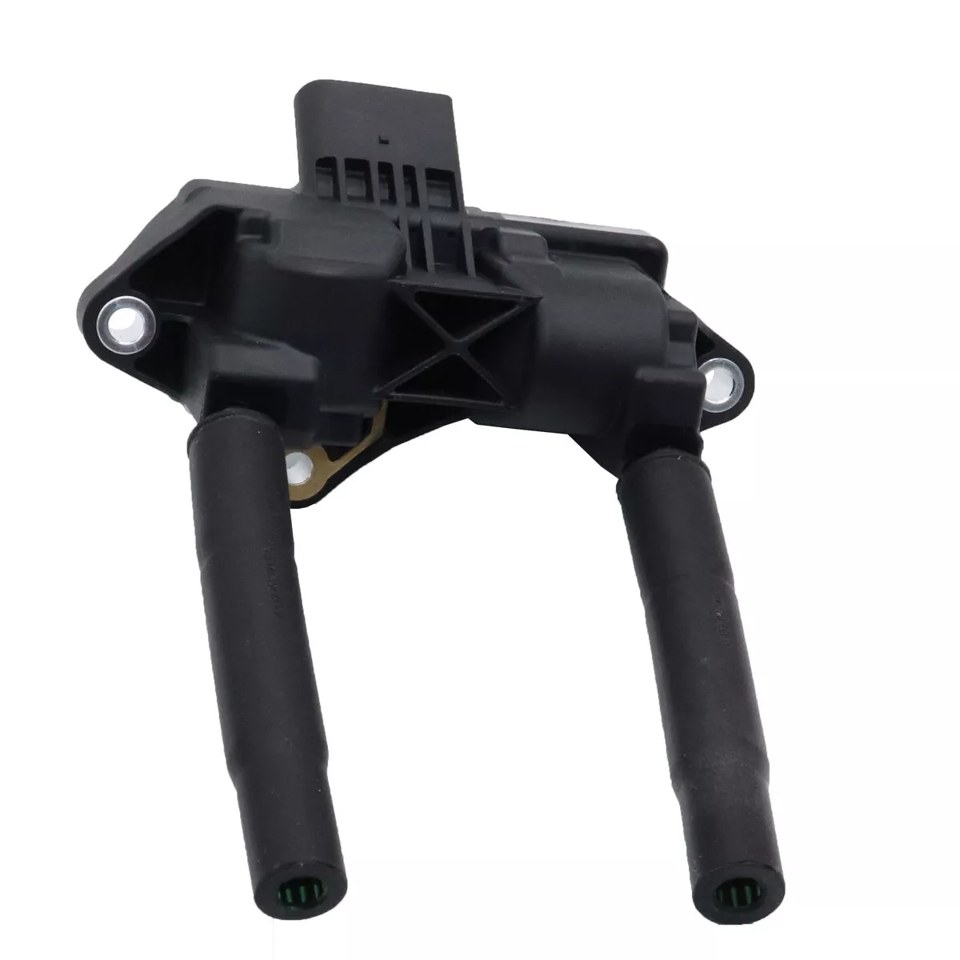
Use a genuine Carpal catalog example carefully
Carpal has a public listing for an ignition coil identified by reference A1779069500. That listing provides an actual starting reference for an inquiry. It does not mean the coil fits every Mercedes-Benz with a similar model badge or every engine in the stated vehicle families. Buyers should verify applicability against the exact VIN and approved catalog data.
I would avoid using the manufacturer’s branding as evidence of compatibility by itself. Engines can differ across model years, regional specifications, and trim levels. Even where a published OE number appears in several catalog entries, the buyer still needs to confirm engine and production details.
| Identification field | Why a buyer needs it |
|---|---|
| Original OE reference | Starting point for an approved cross-reference |
| Make, model, engine code | Distinguishes different ignition systems |
| VIN / production data | Resolves changes within a model generation |
| Connector and mounting details | Helps identify physical and electrical differences |
| Package contents | Distinguishes one coil, pack, boot, or set |
| Quantity requested | Clarifies single-cylinder repair versus multiple units |
Carpal’s ignition coils category is the appropriate product-level starting point. I would still request confirmation of the intended OE number before converting a website listing into a purchase order.
What Should Wholesalers Confirm Before Buying Ignition Coils?
A mixed carton of several coil references can look straightforward on a sales sheet. One wrong connector can produce repeated workshop complaints across the order.
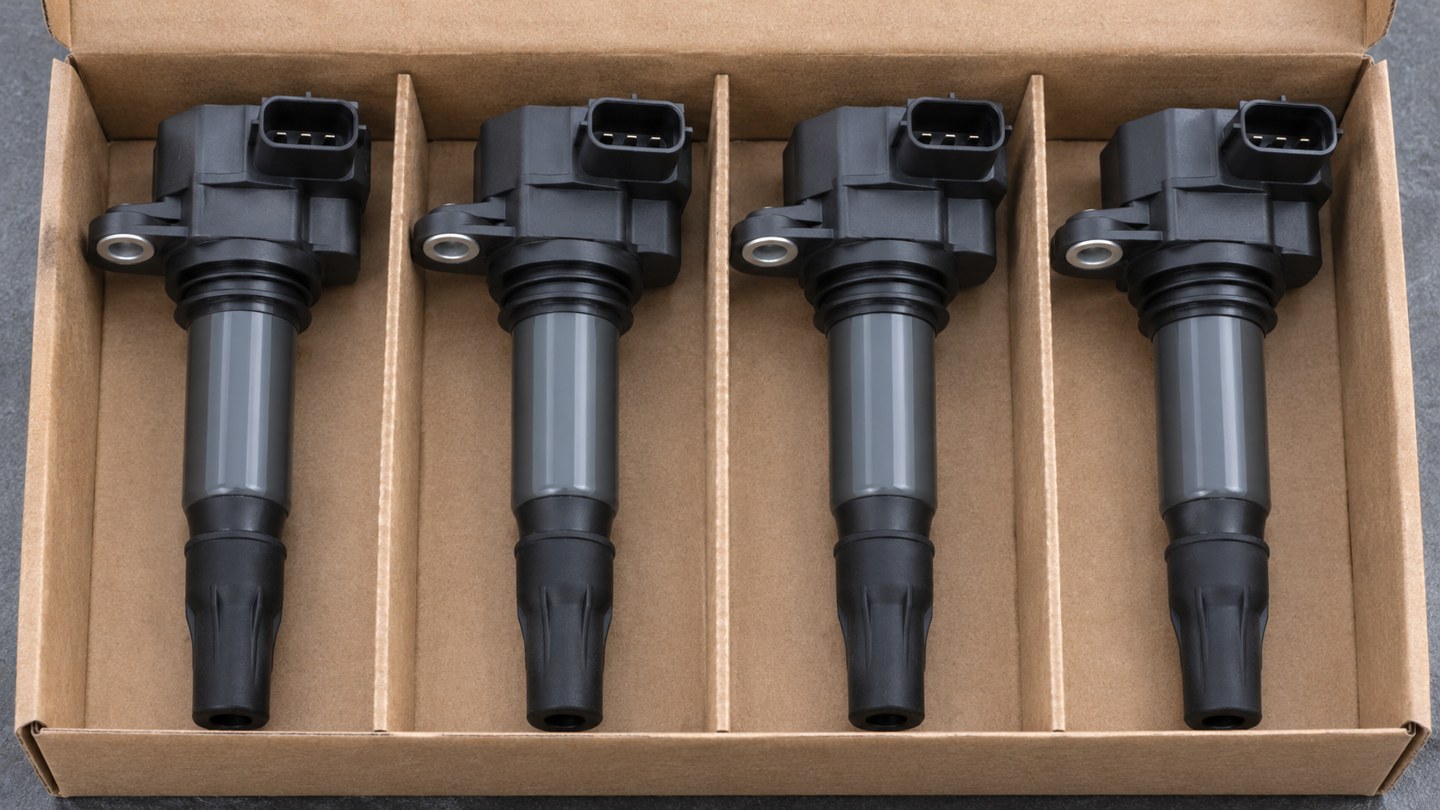
Wholesalers should verify each OE number and engine application, coil design, quantity, packaging, available test or quality documentation, stock, MOQ, lead time, and warranty procedure. Each quoted substitution needs application-level approval.
Build a quote that a workshop can actually use
I would request one SKU per distinct coil reference, with the vehicle and engine information recorded on the same row. If a supplier proposes a different reference, ask for reliable interchange evidence. Do not treat a shared connector or a broad cross-reference list as proof that every application is equivalent.
Next, confirm the product scope. Does the supplier quote a single ignition coil, a complete coil pack, a coil with plug boot, or a multipack? What labeling and traceability appear on each inner box? Can the supplier provide clear product photographs or technical documents for the exact item? These answers help a distributor keep its own online product catalog accurate.
Confirm the commercial side separately
For international replenishment, stock availability, MOQ, lead time, packaging options, destination, and warranty processing should be checked by part number. A company-level statement about inventory cannot guarantee the coil in a particular quotation is ready to ship.
Carpal offers an inquiry channel where buyers can send their OE lists, requested quantities, and vehicle details. I would ask for written confirmation of the correct references and included components before ordering. That simple step supports accurate resale listings and helps the supplier handle later after-sales questions.
The key comparison is not only the lowest invoice price. It is the cost of an identified, correct, and supportable part that the workshop can use. A cheaper but poorly matched coil can create more work than it saves.
Conclusion
Ignition coil replacement costs vary by application and repair scope. Confirm the fault, OE-matched coil, included components, and quotation terms before choosing replacements.