
A worn ball joint can become a safety problem, but a vague estimate can cause another issue. Buyers may quote the wrong joint or an unnecessary control arm.
Ball joint replacement commonly costs about $250–$500 per joint in the U.S. CarParts.com guide; RepairPal estimates $307–$452 on average. Actual bills vary with vehicle, serviceability, labor, and alignment. Neither range is a Carpal wholesale parts price.

The important question is not simply how much one joint costs. A workshop must confirm the defect and repair method; an importer must confirm exactly which part the vehicle uses.
What Determines Ball Joint Replacement Cost?
Two repair invoices can differ even when both say “replace a ball joint.” One may involve a bolt-on part; the other may require additional suspension work.
The main cost factors are the joint or assembly supplied, suspension design, labor to access and remove it, any specified replacement hardware, and required post-repair checks. Regional labor rates and the exact model also affect the total.
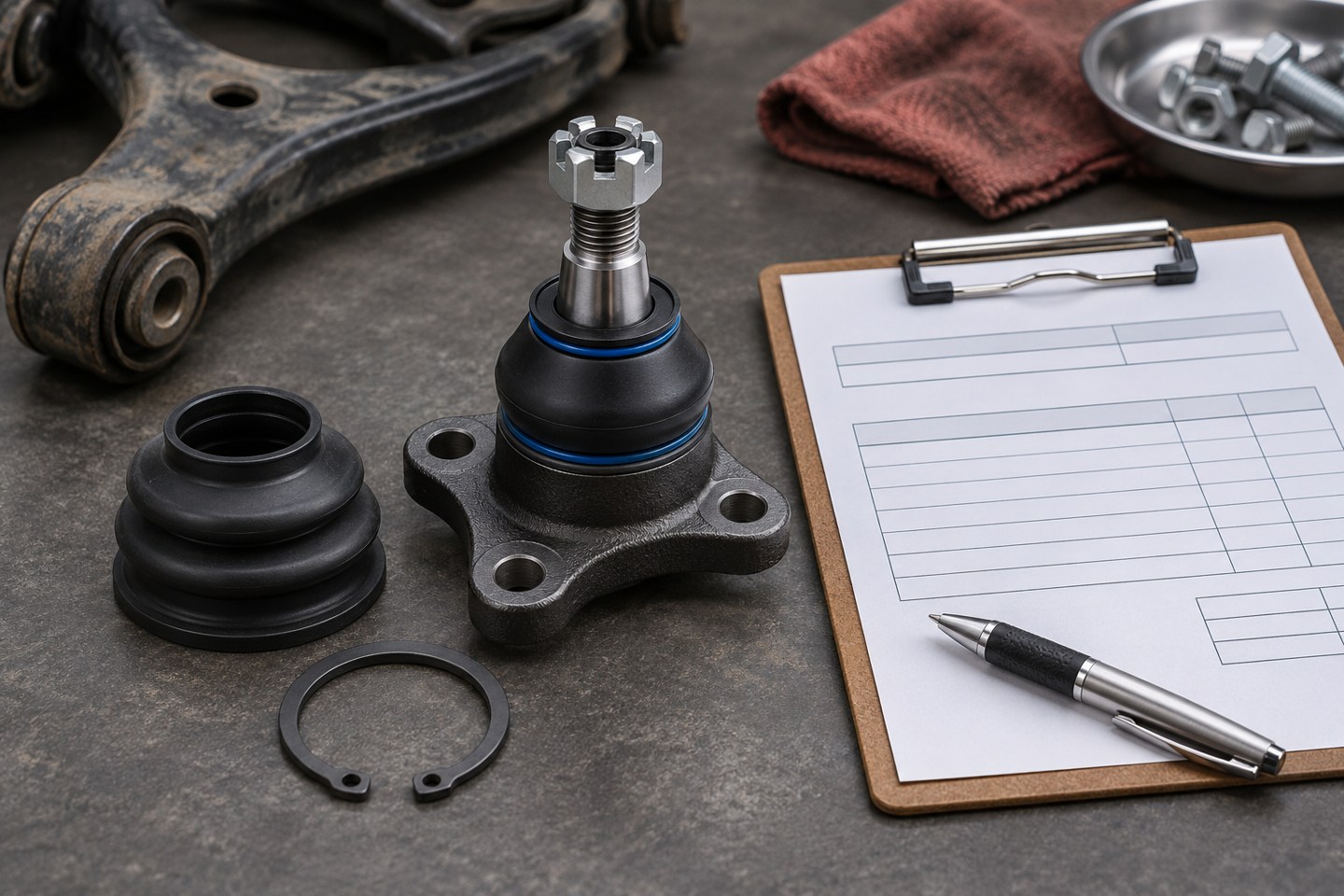
Compare like with like before using a price range
The CarParts.com ball joint cost guide gives a U.S.-oriented estimate of approximately $250–$500 per joint for many vehicles and notes that some bolt-on applications can cost less. This is a useful consumer search reference, not an official quote for a specific Mercedes-Benz or BMW and not a price that should be copied into an importer’s purchase order.
For another reference point, RepairPal’s U.S. suspension ball-joint estimate, updated September 3, 2026, is $307–$452 total, comprising $94–$139 parts and $213–$312 labor before taxes, fees and related repairs. Its parts and labor ranges are estimates, not a guarantee that their endpoints add to an exact quote. The CarParts.com $250–$500 figure is a different publisher’s generalized per-joint repair estimate; do not average the two ranges.
A separate ball joint can have a very different parts price from a complete control arm carrying a joint and bushings. Labor may vary if a press-in joint requires specialized equipment or a suspension arm must be removed. Some installations also require manufacturer-specified replacement fasteners or an alignment check after the repair. The workshop should determine these items from the applicable service instructions.
| Cost element | What affects it | What a buyer should request |
|---|---|---|
| Part supplied | Separate joint or complete assembly | Exact package contents and OE reference |
| Labor | Access, press-fit or bolted construction | Vehicle-specific workshop quote |
| Hardware | Single-use nuts, bolts or retaining parts where required | Confirmed included items |
| Alignment and verification | Suspension adjustments and road checks | Service procedure and measured result |
| Wholesale procurement | SKU, order size, shipping and destination | Part-only quotation per reference |
When building a quotation for distribution, separate retail fitted repair cost from wholesale part cost. They answer different business questions. A strong product listing states what is included and which application it serves; it does not borrow a general U.S. workshop estimate as its advertised unit price.
When Does a Ball Joint Need Replacement?
Knocking over bumps often leads to a ball-joint order. Yet tires, tie rods, bushings, and other chassis parts can produce similar complaints.
A ball joint needs replacement when a qualified inspection finds unacceptable wear, damaged structure, failed retention, or another condition requiring replacement under the manufacturer’s procedure. Noise, steering feel, and uneven tire wear are warning signs, not a diagnosis by themselves.
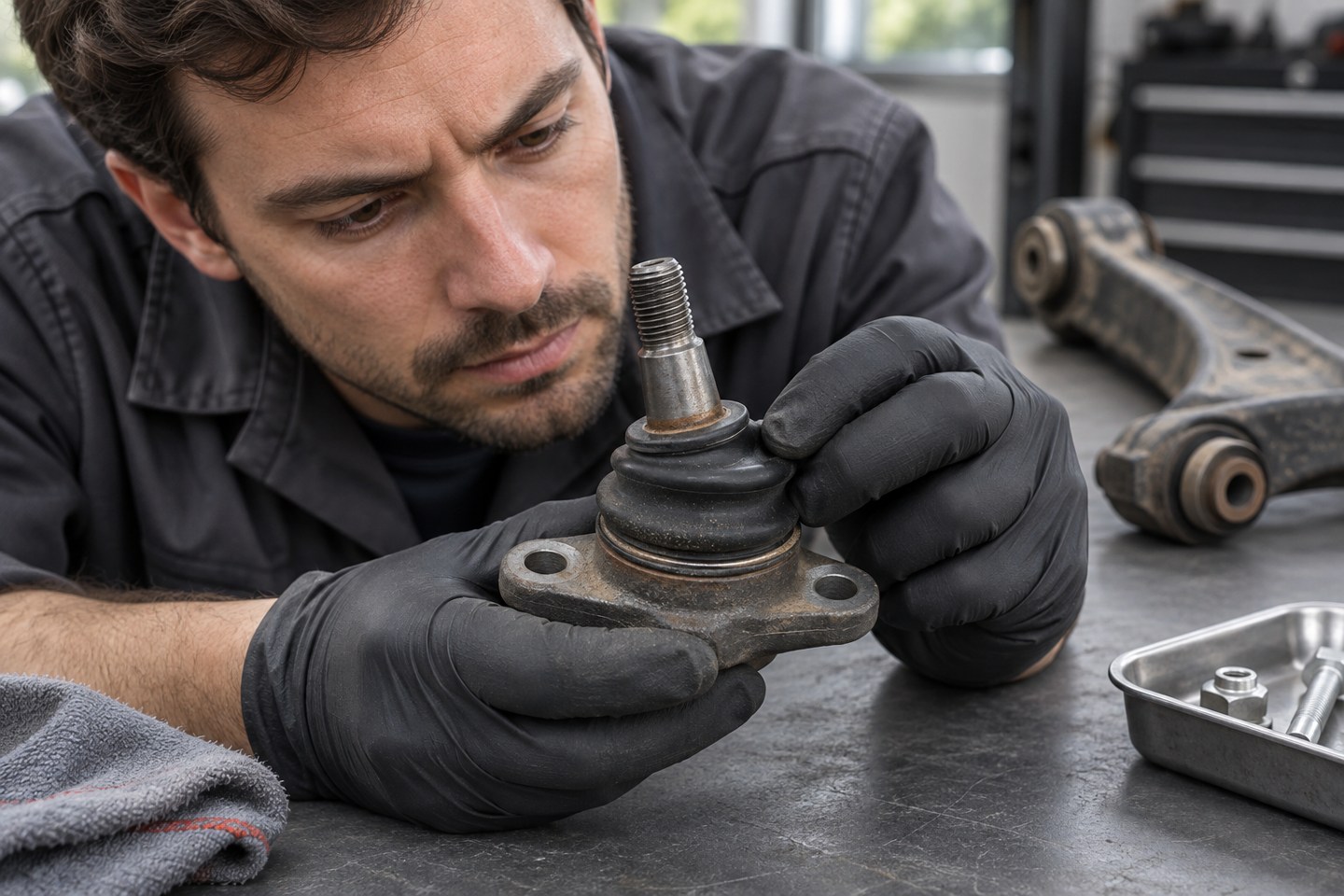
Understand the safety issue
A ball joint creates a movable connection, typically between a suspension arm and steering knuckle. That joint allows required movement while helping hold the wheel assembly in the intended position. If the joint develops excessive play or its connection fails, steering control and wheel alignment can be affected. A severe failure is a safety concern, so suspected major looseness should receive prompt professional inspection.
A split dust boot is also worth investigating. Dirt or water can enter after the seal is damaged, and lubricant may escape. But the visible state of the boot alone does not tell the whole story about the internal bearing surfaces. The technician must inspect the joint and follow the vehicle manufacturer’s method.
Why the inspection method changes with suspension design
Different suspension layouts load ball joints differently. The correct way to support or unload a joint for a wear check depends on how the suspension carries vehicle weight. That is why a universal wheel-shaking test is not sufficient for every model. The correct joint-inspection method and permissible movement must come from the vehicle manufacturer’s service information. MOOG’s press-fit service warning discusses bore retention after repeated pressing—not a universal wheel-play test or inspection limit.
For a distributor receiving a return request, ask for more than “joint loose.” The report should identify the vehicle, installation position, reference number, reported complaint, and actual inspection finding. Photos of the damaged part and mounting area may help. This information cannot replace an approved warranty process, but it can separate a part-identification mistake from a confirmed component defect.
Is It Better to Replace the Ball Joint or the Complete Control Arm?
A separate ball joint may look cheaper on a parts list. If the original arm is not designed for that repair, the cheaper product may be unsuitable.
Choose a separate ball joint only when the vehicle and arm design permit that service and the correct replacement is available. A complete control arm may be required or more appropriate if the joint is integrated, the arm is damaged, or the mounting bore is unsuitable.
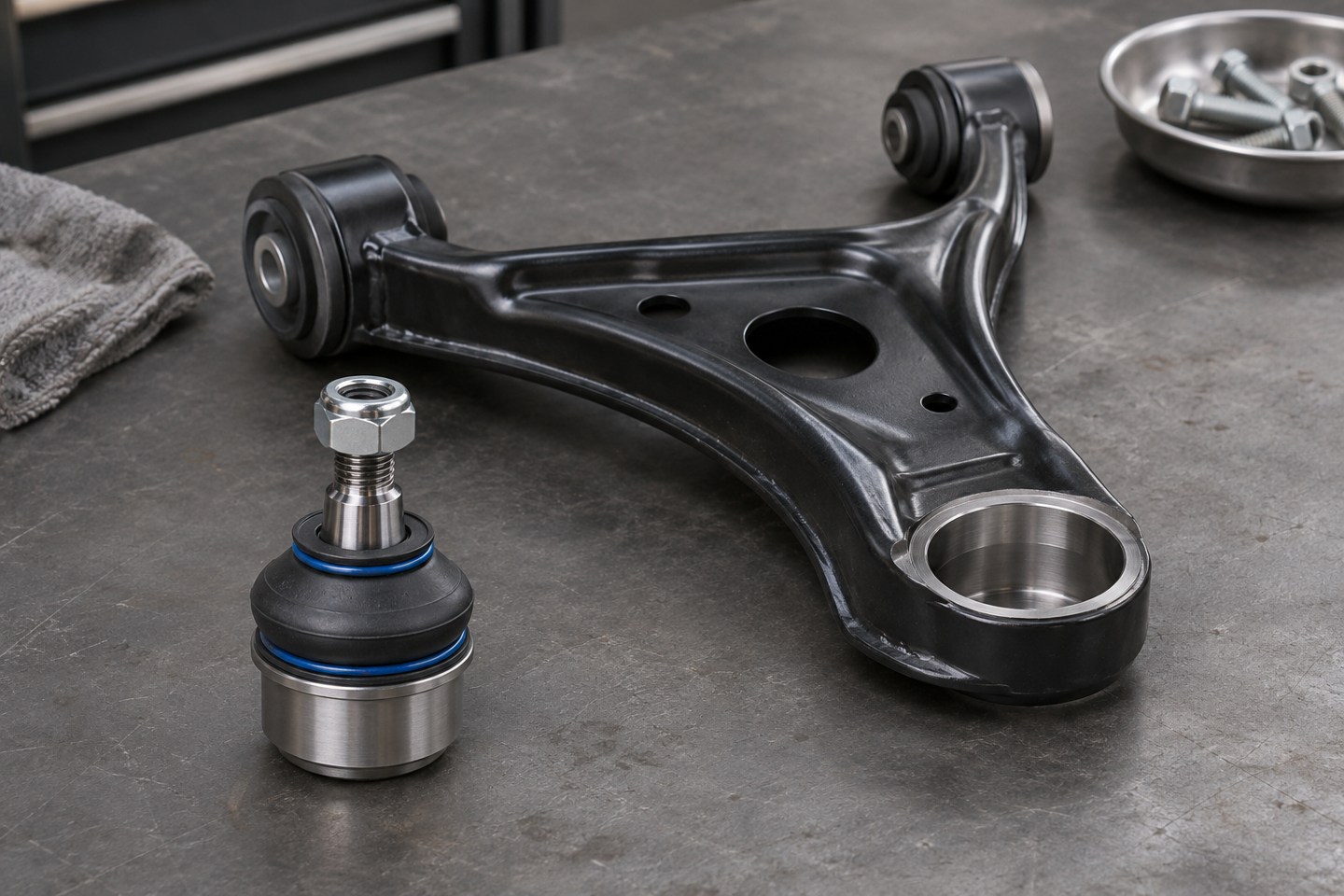
Check how the joint is attached
Some joints use a bolt-on connection, some are pressed into a mounting bore, and others are supplied as part of a complete arm. A workshop must verify the approved service route before buying a loose joint. Even when a separate replacement is commercially offered, that fact alone does not prove it is allowed for the specific arm on the vehicle.
The manufacturer’s repair procedure can require a complete assembly because of construction, tolerance, or safety reasons. MOOG provides a notable technical warning about repeated replacement of press-in ball joints. Repeated pressing can change a control-arm bore, reducing the security of the fit. That warning is a manufacturer-specific technical recommendation, not permission to reuse every arm once or a universal substitute for vehicle instructions.
For press-in joints, retention in the control-arm bore is part of safety, not simply installation convenience. MOOG advises against replacing a pressed-in joint in the same wishbone more than once, because repeated pressing can compromise bore diameter and roundness. That recommendation does not override a more restrictive vehicle-maker procedure. If the arm is not approved for another press, quote the correct complete assembly instead.
| Repair route | Main advantage | Critical limitation |
|---|---|---|
| Separate bolt-on joint | Can preserve a usable arm | Correct mounting, bolt specification and fitment required |
| Separate press-in joint | May reduce parts expenditure | Bore condition, fit limits and approved procedure are essential |
| Complete control arm | Replaces matched arm and attached components | Exact geometry, side and assembly contents still need confirmation |
For international buyers, it helps to keep a separate part-number column for the joint and for the full arm when both are valid products. Do not describe them as substitutes without confirmed application data. A good quotation also states whether bushings, ball joints, and installation hardware are included with a complete assembly.
How Do You Match the Correct Ball Joint on a European Vehicle?
A product photo may show a familiar tapered stud, but tiny differences in mounting or orientation can prevent installation. A generic “fits Mercedes” label is not enough.
Start with verified OE or catalog references, the full vehicle application, suspension position, and joint mounting design. Confirm the arm or knuckle interface, attachment method, and any application restrictions before approving an alternative part.
Use the vehicle information as a system
The buyer should supply make, model, chassis or platform, production year or date, and VIN when appropriate. Position is equally important: front or rear, upper or lower, left or right, and forward or rearward arm if multiple links are installed. The wheel-side joint may look similar across several models even though the mounting dimensions or connection layout differ.
The joint can be described as a separate catalog item in one application and as part of a complete arm in another. A buyer also needs to know whether the product comes with a new nut, circlip, pinch bolt, or other hardware where the manufacturer’s procedure specifies it. Never assume a photo of a complete arm means the loose ball joint is sold separately.
Apply Carpal’s verified catalog carefully
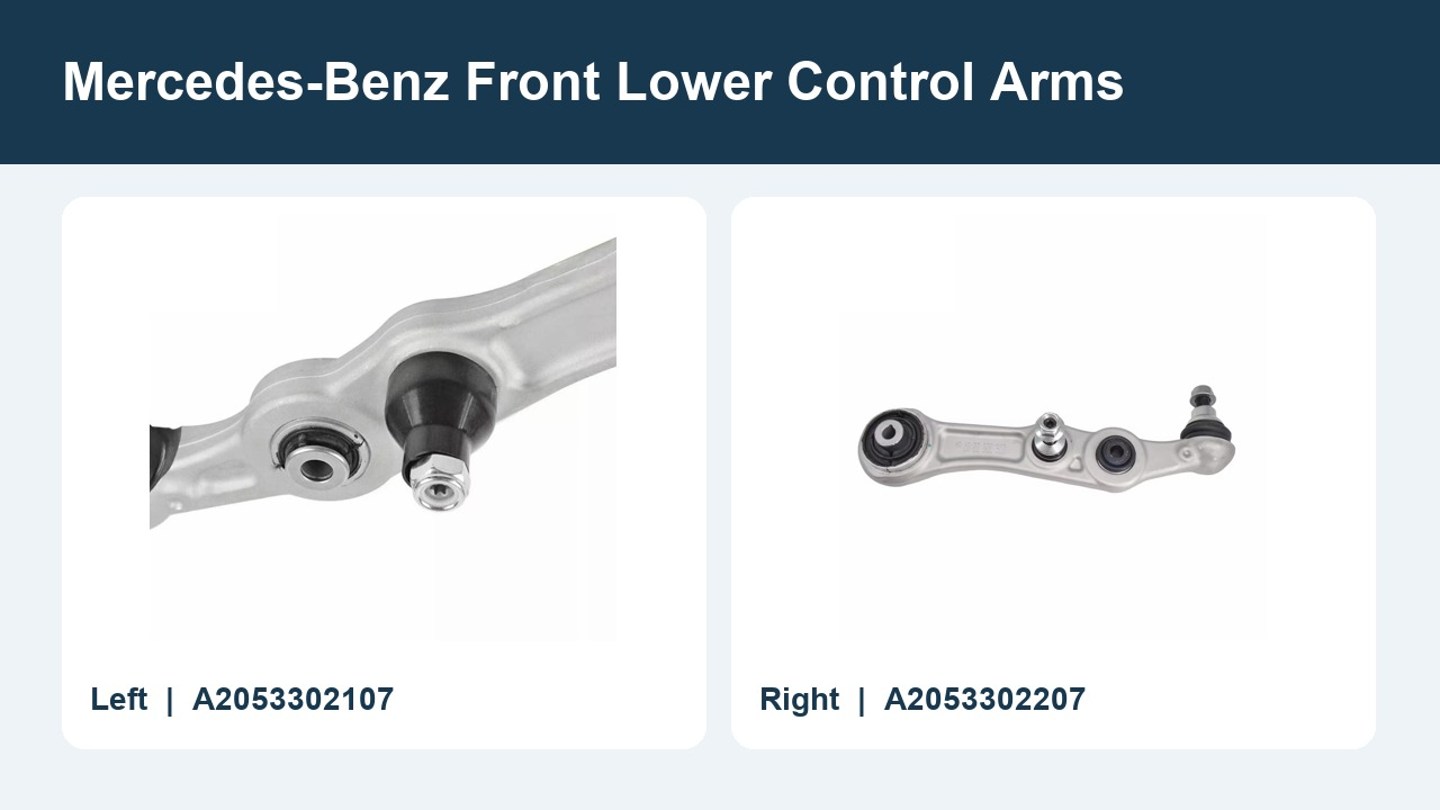
Carpal has a control arm product category with identifiable Mercedes-Benz listings. For example, the catalog distinguishes a front-left arm under OE A2053302107 from a front-right arm under OE A2053302207. These are control-arm references, not proof that Carpal sells separately serviceable ball joints for those exact arms. Mercedes-Benz’s official parts catalog identifies A2053302107 as a left-side lower arm including a ball joint and bushings, and A2053302207 as a right-side lower rearward arm for specified configurations. The configuration restrictions mean neither OE should be generalized to every W205 vehicle.
A supplier request should therefore say whether the workshop needs a separate ball joint or an arm assembly. Ask the sales team to check the exact OE, assembly design, and vehicle application rather than choosing a replacement from the part’s appearance. This distinction can reduce expensive mistakes when a small workshop orders from an overseas distributor.
Does Ball Joint Replacement Require Wheel Alignment or Other Work?
A correct part can leave handling complaints if the repair changes geometry or another component remains worn. Installing the joint alone may not complete the job.
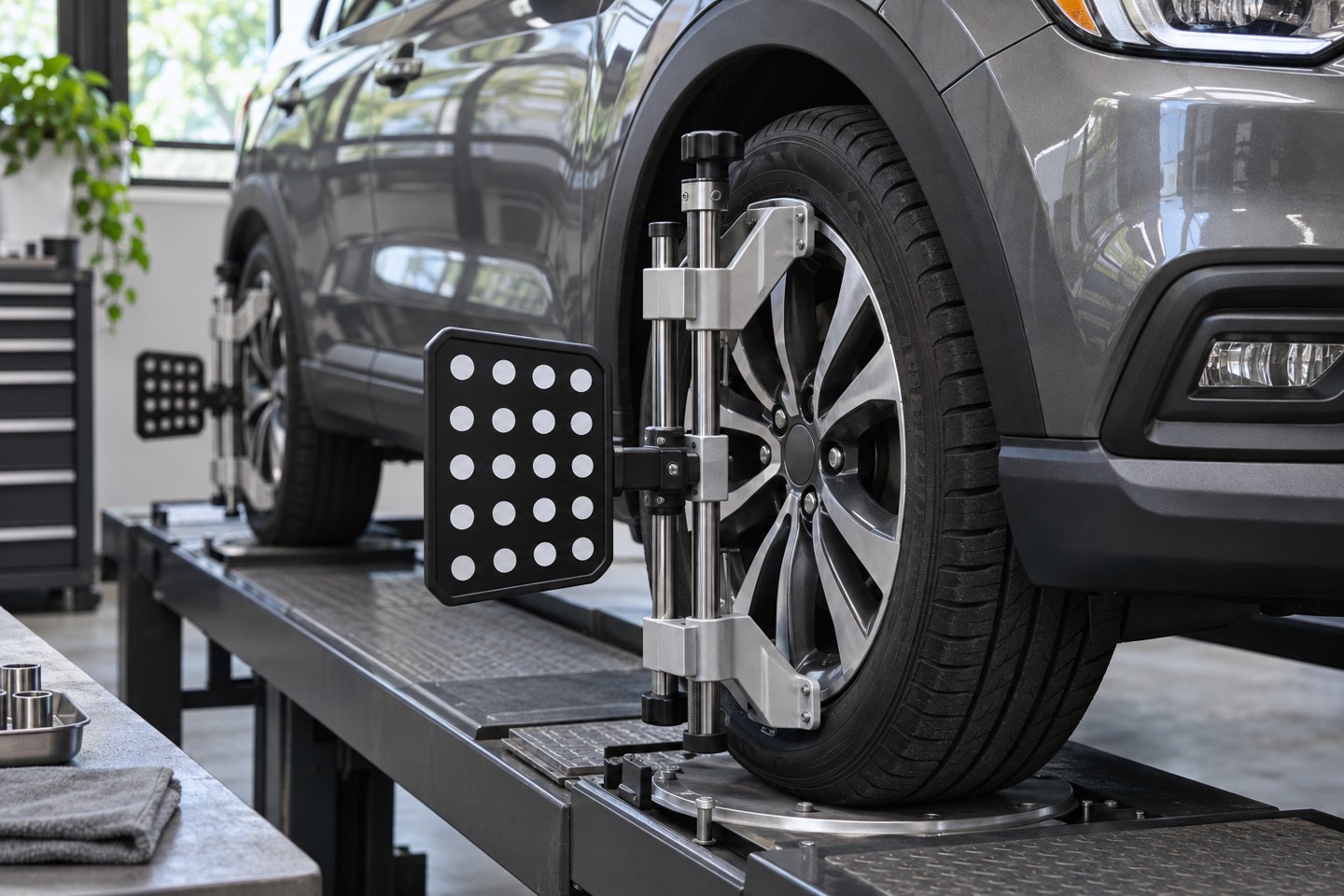
Post-repair work depends on the vehicle and repair method. The workshop should check suspension connections, follow specified tightening procedures, and measure or adjust wheel alignment where required by the manufacturer or indicated by the repair and inspection results.
Do not treat alignment as a fixed extra cost
Removing a control arm or changing its mounting can affect alignment geometry on some vehicles. Other service procedures may have different requirements. The workshop should refer to the manufacturer’s instructions and verify the vehicle’s final condition. An alignment quotation is part of the local fitted repair service, not an item automatically included in a wholesale ball-joint price.
A technician should also inspect nearby steering and suspension components. Worn tie rods, bushings, or a bent arm can contribute to similar symptoms and may interfere with the final alignment. They should be diagnosed rather than added to the parts list without evidence. For parts suppliers, this matters because customers sometimes blame a newly fitted joint for steering or tire wear that was already present.
Replacement hardware deserves its own line
A service procedure may call for new nuts, bolts, or other retention components. Those requirements differ with the joint and mounting system. Buyers need an accurate package description so the installer is not surprised by missing hardware. Likewise, a press-in part must match the intended bore and be fitted with the correct equipment; forcing an incorrect joint into an arm can compromise the installation.
For a workshop chain, the record should connect the supplied OE reference, technician’s diagnosis, repair method, and alignment results. For a wholesaler, that same traceability helps answer later application questions. It is better to document a properly verified repair than to promise that every replacement eliminates all future front-end noise.
What Should Wholesalers Confirm Before Ordering Ball Joints?
Mixed suspension orders can include loose joints, complete arms, and lookalike parts from different locations. A vague description creates costly picking and fitment errors.
A wholesale order should record the exact part or assembly, verified reference, vehicle application, installation position, construction, quantity, and included hardware. Stock, MOQ, packaging, lead time, and warranty requirements should be confirmed for each SKU before purchase.

A decision tree for an actual repair quote
When a buyer asks “How much is a ball joint?”, clarify: (1) Is the invoice for one joint, a pair, or an integrated control arm? (2) Does the vehicle maker authorize a replaceable joint, and is the arm bore serviceable? (3) Does the local workshop quote include press labor, new one-time hardware, alignment checks and taxes? (4) Is the importer asking for a fitted retail repair estimate or a part-only wholesale quotation? Only then compare like-for-like prices. This avoids turning a low-priced loose joint into a misleading quote for a complete suspension repair.
Make every line item independently checkable
Start the request with a product type field: separate ball joint, complete control arm, or another suspension component. Add its verified OE reference or manufacturer catalog number, the target vehicle, and the precise installation location. Ask for drawings or detailed photographs when mounting details are uncertain, but treat these as supporting evidence rather than substitutes for an approved application check.
| Procurement field | Example | Prevents |
|---|---|---|
| Part scope | Loose joint or full arm | Quoting the wrong assembly |
| OE / cross-reference | Verified reference, not guessed match | Wrong component substitution |
| Vehicle application | Chassis, production date, VIN where needed | Incorrect model-year fitment |
| Position | Axle, side, upper/lower and link location | Left-right or link-location error |
| Mounting | Bolt-on, press-in, integrated | Incompatible repair route |
| Package contents | Joint, nut, boot, retaining items | Missing workshop hardware |
| Commercial details | Quantity, MOQ, stock and destination | Unclear delivery or pricing assumptions |
Protect the buyer from unsupported quality claims
A distributor should request relevant product information, current quotation terms, and a clear warranty policy for the exact part. Do not confuse “OEM,” “genuine,” and “aftermarket” as though they always mean the same thing. Packaging or private-label requirements should also be discussed only after fitment and product scope have been established.
Carpal’s suspension parts range can support a sourcing conversation, but it does not by itself verify a loose ball-joint SKU or guarantee availability for a particular model. Buyers should provide the correct reference, quantity, and destination and request written confirmation. That makes the technical part of an international order as clear as the commercial part.
Conclusion
Ball joint replacement cost depends on repair design, labor, and fitment. Confirm the fault, serviceable part, OE reference, and order scope before comparing quotations.