
A simple-looking PCV valve can hide a complicated repair. Replacing the wrong part may leave an air leak, oil problem, or engine warning unchanged.
PCV valve replacement begins by confirming the fault and identifying the engine’s ventilation design. A serviceable standalone valve may be replaced separately; integrated systems may require a specified regulator, housing, hose, or assembly. Follow the vehicle’s service procedure, verify OE fitment, and check the system after repair.

This guide focuses on the replacement decision rather than repeating the basic explanation of what a PCV valve does. It also shows why the correct procurement reference matters for European vehicles.
Can Every PCV Valve Be Replaced as a Separate Part?
A low-cost valve shown in a basic tutorial may look easy to swap. But modern engines can build the pressure regulator into a larger assembly.
Not every PCV system has a separate, removable valve. Some engines use a serviceable inline valve, while others integrate pressure regulation or oil separation into a cover or ventilation module. The correct replacement part depends on the engine design and the manufacturer’s service instructions.

Identify the architecture before selecting tools or parts
Positive crankcase ventilation controls the route taken by blow-by gases and helps manage crankcase pressure. Older designs may have a valve attached to a hose or cover that can be removed on its own. Other systems include diaphragms, separators, one-way valves, multiple hoses, or pressure-regulating functions built into a larger component. The differences are not cosmetic. They affect the service procedure, the repair scope, and which component a distributor must quote.
A product catalog may describe an item as a PCV valve, crankcase ventilation valve, breather hose, oil separator, or valve cover assembly. Those terms do not guarantee that the items are interchangeable. A hose can route gases without performing the same pressure-control function as a regulator. A failed diaphragm may require a different repair from a cracked external hose, depending on what the manufacturer supplies as a service part.
Haynes explains the basic function and symptoms in its PCV valve guide. That explanation is useful background, but the actual component location and service scope must come from the specified engine. Do not apply a generic demonstration to a Mercedes-Benz, BMW, Audi, or Volkswagen engine simply because the vehicle uses crankcase ventilation.
When the vehicle identity is incomplete, start with the engine code and OE parts information. The first decision is what is meant to be serviced, not how quickly an accessible-looking part can be removed.
When Is PCV Valve Replacement Actually Necessary?
Rough idling and oil consumption may point to crankcase ventilation. Replacing a valve without confirming the cause can leave both symptoms unchanged.
Replace a PCV component when the applicable service schedule calls for it or diagnostic inspection confirms that a serviceable valve, regulator, diaphragm, hose, or related assembly has failed. Symptoms alone cannot identify which component needs replacement or whether the PCV system is responsible.

Distinguish the complaint from the failed component
A defective ventilation system may contribute to rough idle, whistling, abnormal crankcase pressure, or changes in oil consumption. Yet intake air leaks, engine wear, turbocharger issues, fueling faults, and unrelated mechanical problems can also cause similar complaints. A visible oil leak near a valve cover may involve a seal rather than the ventilation regulator. A diagnostic fault code may guide testing but rarely proves a particular valve is defective by itself.
A maintenance interval found in a generic consumer article does not apply to all engines. Some PCV components are inspected or replaced based on condition. Others form part of a larger system without a routine standalone-valve replacement interval. Buyers should not promise a universal service life for the parts in their catalog.
| Reported complaint | PCV-related possibility | What must still be checked |
|---|---|---|
| Unstable idle | Unmetered air or abnormal ventilation flow | Intake leaks, fueling, ignition, other faults |
| Whistling sound | Air entering through a damaged regulator or hose | Exact sound location and pressure behavior |
| High oil consumption | Failed separation or crankcase pressure issue | Engine wear, leaks, turbocharger and operating conditions |
| Oil residue near ventilation parts | Cracked line, seal, or module | Trace the actual source before selecting the part |
HELLA documents one engine-specific crankcase ventilation failure that can cause poor running and oil consumption. It is a Ford application example, not a Mercedes M274 diagnostic procedure. It illustrates why the damaged component, not just the symptom, must be identified.
For professional purchasing, ask the workshop whether the diagnosis calls for a regulator, external hose, complete cover, or another part. That answer determines the correct quotation.
How Should a Technician Diagnose a PCV System Before Replacement?
Rattle tests, blowing through a valve, and opening the oil cap seem easy. None reliably diagnoses every PCV design, and they can alter pressure behavior.
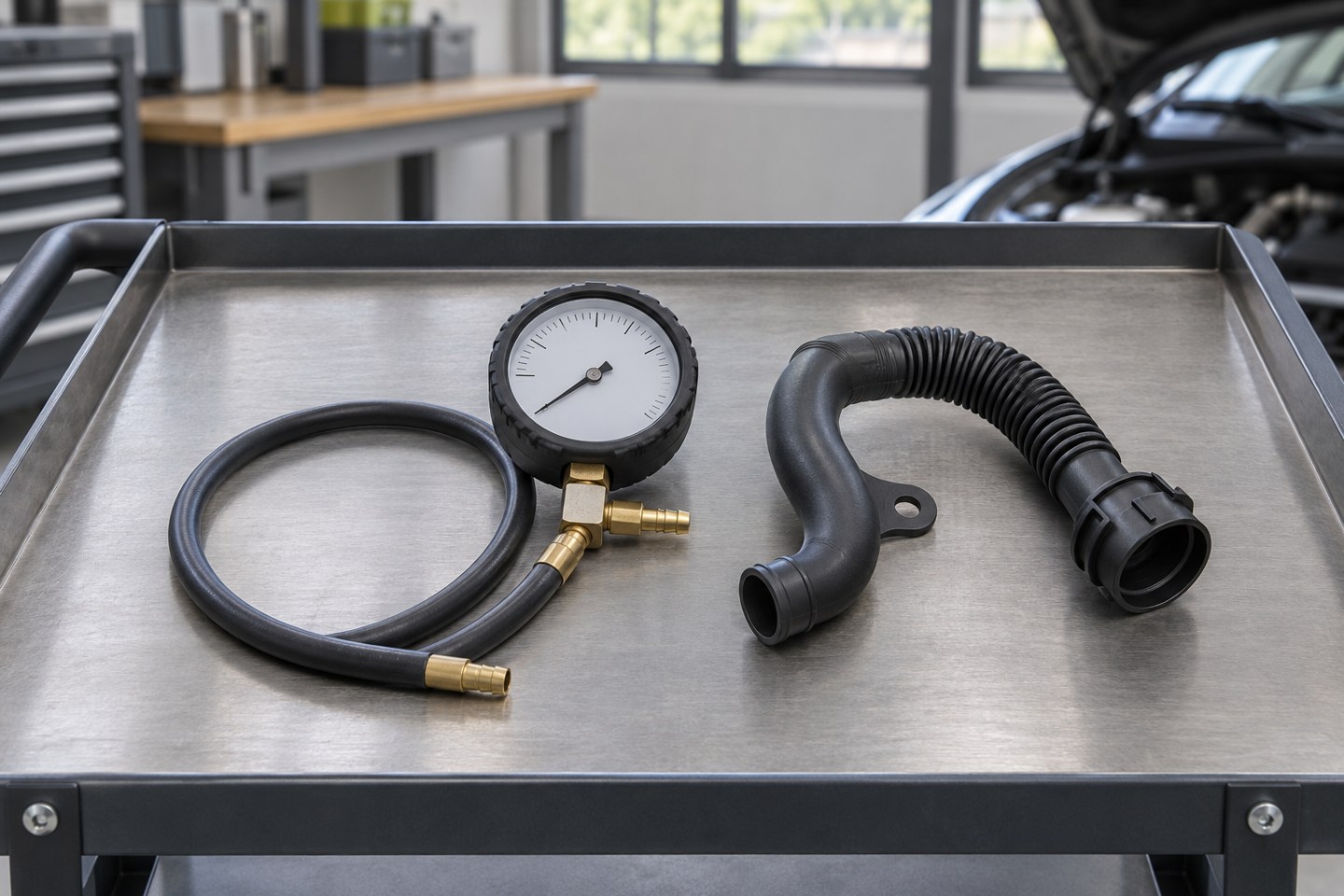
PCV diagnosis should follow the specified engine procedure. A technician may inspect hoses and seals, read relevant faults, assess intake leakage, and check crankcase pressure or regulator behavior with appropriate equipment. Universal pressure numbers, rattle tests, and component-swap guesses should not replace application-specific instructions.
Make a complete diagnosis before ordering
Start with vehicle identification. Record the make, model, production date, engine code, and any available OE reference. Then review the symptom history. Was the complaint present before recent service? Does it occur at idle, during acceleration, or only when the engine is warm? These details can distinguish a ventilation problem from a broader drivability issue.
The technician should visually inspect the accessible ventilation parts for cracks, damaged connectors, loose fittings, and oil traces. The next step depends on the design. A controlled pressure test, smoke test, or other approved procedure may help locate leaks, but the correct equipment and permissible test conditions are engine-specific. Avoid presenting an arbitrary crankcase vacuum reading as a pass-or-fail threshold for every vehicle.
Never disconnect hoses or open pressurized or moving systems in an unsafe condition. Hot engine parts, rotating accessories, and electronic connectors require appropriate precautions. On systems that rely on specific pressure regulation, creating an artificial air leak during testing may change how the engine runs. The service manual must define how tests are performed and interpreted.
Inspection should also identify related components. A brittle hose can fracture during removal. An oil separator may have a different fault from the pressure regulator. An intake leak that happens to be near the PCV line can mislead the diagnosis. This matters to a distributor because a quoted standalone valve may not solve a broken assembly connection.
A clear diagnostic request should identify the failed component and include photographs or a service finding. That makes sourcing faster and reduces returns attributed incorrectly to a replacement product.
What Changes During PCV Valve Replacement on Different Engines?
A generic five-minute replacement procedure does not fit every engine. The access, fasteners, connected hoses, and post-repair checks can all change by application.
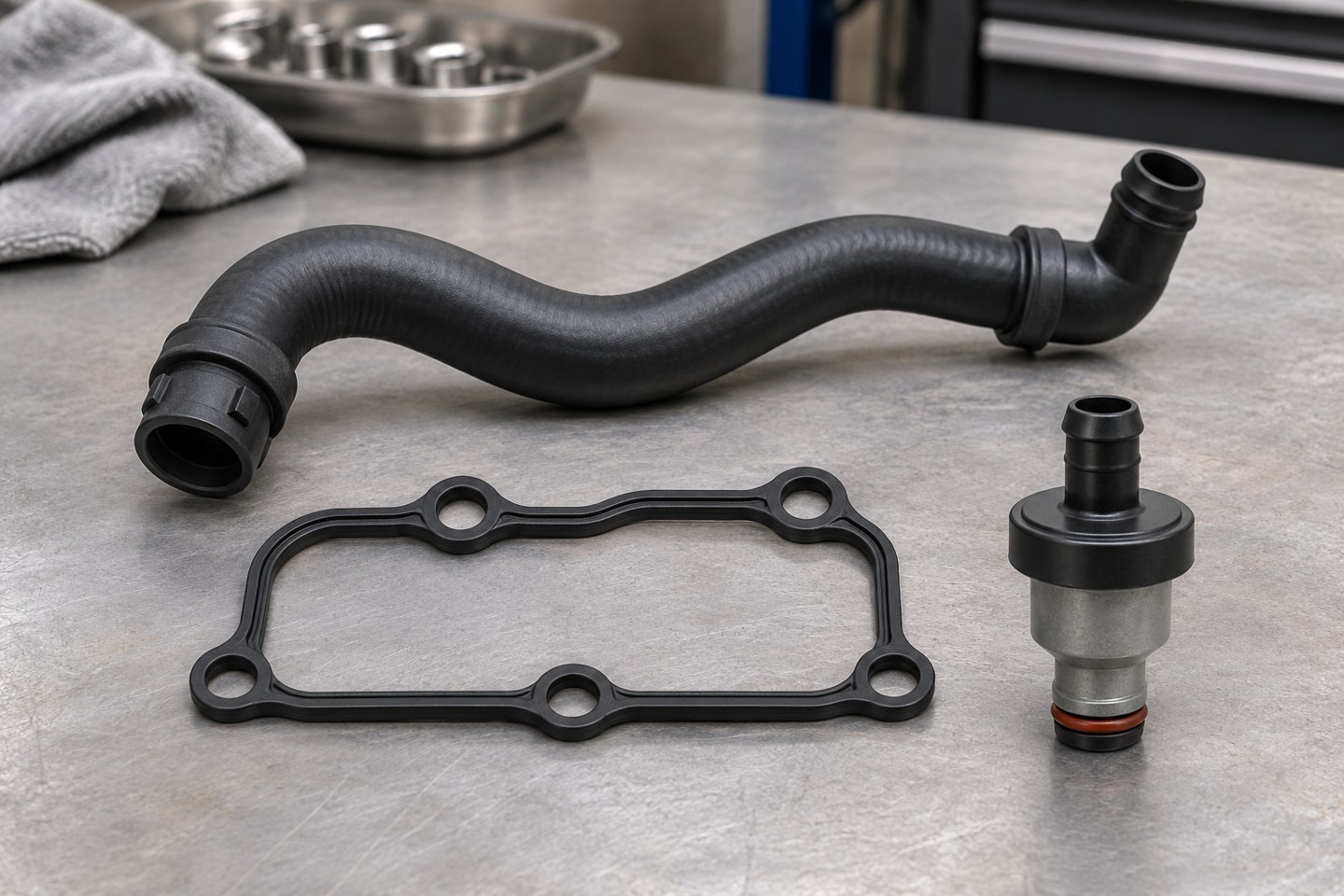
For a serviceable PCV valve, replacement may involve removing connected hoses or retaining parts, fitting the specified valve and seals, and checking the result. Integrated systems may require replacing a larger housing or module. The vehicle manufacturer’s exact procedure, hardware instructions, and diagnostic checks take priority.
Use a controlled service sequence rather than a universal shortcut
A safe professional workflow begins with identifying the part to be replaced and the required access. The workshop then checks the repair instructions, required tools, relevant fasteners, sealing surfaces, and whether adjacent components must be removed. The replacement’s orientation, connectors, and sealing features must be verified before installation.
Replacement workflow for a confirmed, serviceable standalone PCV valve:
- Verify the correct replacement. Match the engine identification and OE application; obtain any required grommet, O-ring or hose specified by the service manual.
- Prepare safe access. Let the engine reach a safe working condition, switch it off, and remove covers only as the service documentation directs.
- Identify and document connections. Photograph hose routing, clips and valve orientation before disassembly.
- Release the specified fittings. Disconnect the hose or retaining hardware using the correct release method; do not force an aged plastic connection.
- Inspect the adjacent parts. Check the hose, grommet and sealing surface for cracks, deposits or damage that could explain a continuing leak.
- Install the approved part. Follow the specified seal replacement, orientation and tightening instructions; do not invent a general torque or use sealant unless approved.
- Verify operation. Reconnect everything, check for new intake or oil leaks, reassess the original symptoms and read fault codes as prescribed.
Integrated regulator or cover? This list is not a teardown procedure for a non-serviceable module. First identify the manufacturer-approved assembly and the separate instructions required for that engine. Avoid splitting a sealed housing or replacing only its diaphragm unless the repair is expressly supported.
A traditional removable valve may connect to a hose and a grommet. But a modern regulator may be attached to a complex housing with several ventilation passages. Some plastic connections become brittle with age. A technician who assumes a clip or hose can be pulled in the same way on every engine may damage a component that was originally serviceable. The full scope of work could then change.
Do not invent tightening torques, sealants, replacement intervals, electronic reset instructions, or adaptations. The manufacturer may specify new seals, one-time-use fasteners, or particular post-repair checks. If a valve is supplied as part of a larger module, replacing an unapproved subcomponent may not be a suitable repair.
After installation, inspect the connections and assess the original complaint using the approved method. A warning light may require proper diagnostic evaluation; clearing a code without confirming the repair is not a valid outcome. Check that there are no new air or oil leaks and that any hoses and connections are routed correctly.
For an importer, the lesson is practical: the correct product is the service item prescribed for the identified engine, not merely the least expensive component sold under the PCV label.
How Do You Identify the Correct Mercedes-Benz M274 PCV Component?
Mercedes-Benz M274 parts listings can place a ventilation valve and a breather hose near each other. Their OE references represent different items, not automatic substitutes.
Start with the correct OE reference and confirm the engine, vehicle configuration, production period, and physical connections. A crankcase ventilation valve and a breather hose must be ordered as their own verified part types, even if both belong to the same M274 ventilation system.

M274 Ventilation Valve vs. Breather Hose
Carpal’s catalog includes the Mercedes-Benz M274 crankcase ventilation valve, reference A2740182201 and a separate crankcase breather hose, reference A2740187301. The published product pages describe different components with different OE references. Their application notes include M274 vehicle families, but they also warn that compatibility depends on the specific vehicle configuration.
The two parts must not be treated as interchangeable because they belong to one engine family. One could be needed for a pressure-regulation failure, the other for a damaged line, or a workshop could identify other parts as the actual repair. Neither product listing proves that every M274-powered vehicle requires the same component.
| Product identification | Listed Carpal reference | Buyer must confirm |
|---|---|---|
| Crankcase ventilation valve | A2740182201 | Correct engine variant, housing and connection layout |
| Crankcase breather hose | A2740187301 | Hose route, ends, fittings and actual application |
A useful inquiry includes the original failed part number, VIN where permitted, engine code, model and production date, photographs of the old part, and the intended repair scope. Any supersession or cross-reference should be checked against the vehicle’s approved application record. A similar-looking regulator cover or hose end does not establish a valid substitute.
Where product-page packing or MOQ information is shown, confirm the current terms for the exact part before ordering. One product’s MOQ is not a universal rule for Carpal’s entire ventilation range.
What Should B2B Buyers Confirm Before Ordering PCV Parts?
An unclear request for “PCV parts for Mercedes” can lead to three different quotations. A precise part list is faster than resolving an incorrect shipment later.
Wholesale buyers should specify each PCV component by verified OE reference, engine application, part type, quantity, connection details, and package contents. Availability, MOQ, lead time, packaging, and warranty requirements must be confirmed per reference, not assumed across the product family.
Build a verifiable sourcing request
For a mixed order, use one line per reference and identify whether it is a valve, regulator, hose, separator, or assembly. Add the vehicle details needed to validate fitment and any photographs that show the connection ends. When the workshop needs related seals or additional hoses, list those separately. A sales team should not infer the full repair scope from a single number.
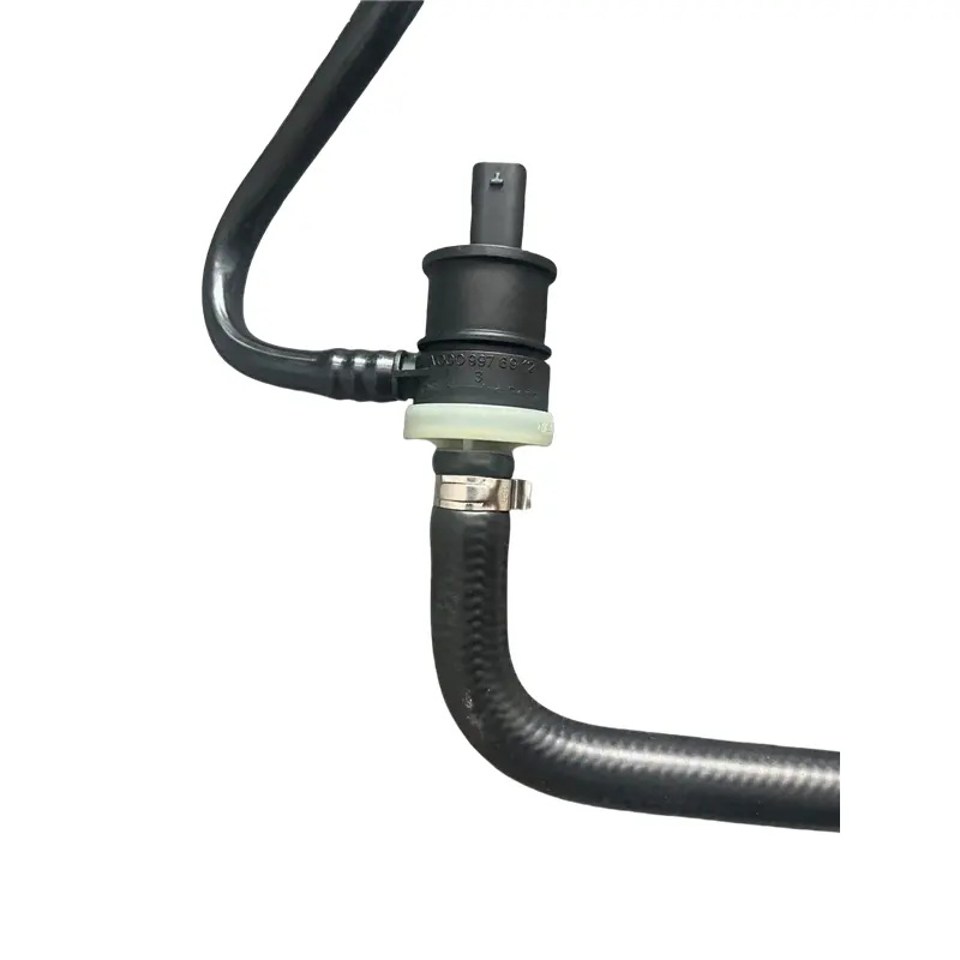
Next, confirm the package. Does the supplied item include a gasket or retaining part? Is the product an individual valve or a complete module? Are the connectors consistent with the approved application? These details matter to distributors that create their own online catalog descriptions. A misleading image may cause a buyer to expect more pieces than the box contains.
Commercial terms should follow technical verification. Ask for the current minimum order quantity, stock status, delivery terms, packaging, batch identification, and applicable warranty conditions for each SKU. If private-label packaging is requested, clarify whether the service is offered for the relevant product and order quantity. Do not present general marketing information as a product-specific commitment.
Carpal’s crankcase ventilation product category is a practical starting point for the listed M274 components. Buyers can request a quotation with exact OE references, vehicle details and quantities; stock and terms require confirmation. Careful sourcing prevents a common error: buying an available ventilation part because it has a familiar name instead of buying the component the diagnosis requires.
Conclusion
PCV replacement depends on the engine’s design and a confirmed fault. Identify the correct service component, verify its OE application, and recheck the system after repair.